
AI Might Change the Software. It Won’t Remove the Problem.
AI is changing the economics and boundaries of software, but the organizational problems underneath it still need to be understood and solved.
There's a particular kind of conversation about AI that I keep coming across in LinkedIn feeds, Reddit threads, and conversations with people working in and around technology. The specifics vary, but the conclusion is often similar: large language models will eventually make many of the software products we use today unnecessary.
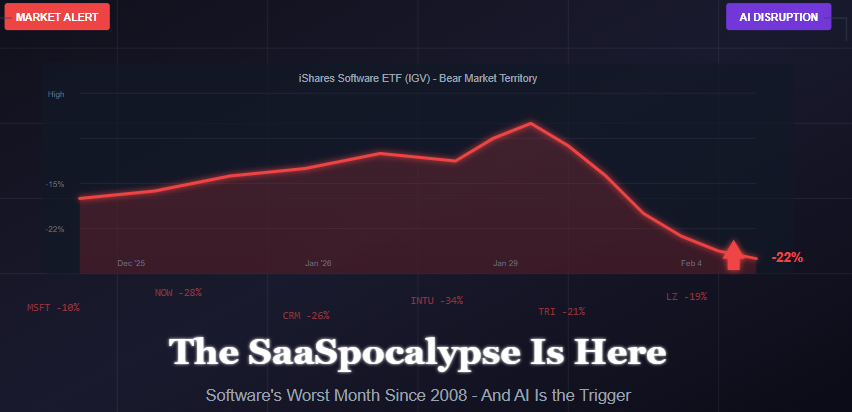
Some versions of the argument focus on a company like HubSpot: an AI agent could manage customer relationships, write emails, update records, analyze conversations, and choose a next step, so the platform may become less necessary. Other versions question whether organizations will continue paying for specialized applications at all if software can be generated quickly and inexpensively.
There's truth underneath some of these predictions. The economics of software are changing, and companies built around high margins, expensive implementation, or capabilities that can now be reproduced relatively easily should expect pressure. We're already seeing organizations reconsider the size of their teams, how much software they need, and what they're willing to pay for capabilities that are becoming easier to produce.
Where I disagree is with the leap from software will change to the problems that software addresses will disappear. Working in product for more than a decade, and more recently consulting with smaller businesses and nonprofits, has led me to focus on how AI changes the amount of a problem a product, organization, or individual can reasonably address.
That distinction affects more than software companies. It also gives employees and consultants a way to think about the work they can do as the tools and business models change.
Software categories aren't the problems behind them
Consider customer relationship management (CRM) software. A business doesn't fundamentally need a CRM because it needs a database with Contacts, Companies, Deals, and Reports in a navigation menu. Those are ways software companies have organized a much broader set of needs.
A business needs to know who its customers are and what interactions have already happened. Someone needs to know which prospective customer requires a follow-up, whether another employee has already contacted them, what they purchased, and what should happen next. As the organization grows, it may also need permissions, reporting, automation, integrations, and a reliable history that multiple people can work from.
Today's CRM platforms package those needs into a recognizable software category, and AI may change how people work with that package. Rather than opening a CRM, finding a customer, reviewing a timeline, updating a field, and creating a task, someone may ask an AI system what needs attention and let it coordinate more of the work. The interface can change while the information, rules, history, permissions, and processes still need to exist somewhere.
That's why I'm hesitant to conclude that AI will eliminate CRM. It may change the experience, the companies providing it, and what organizations pay; the term itself could become less useful over time. None of those changes removes the need to manage customer relationships.
The boundaries around those problems can change
Lower costs of producing and adapting software could also change how much of an organization's work a single product can address.
Historically, horizontal platforms, designed to serve many types of organizations, have been one way to manage the cost of specialization. Companies built configurable products rather than a different system for each customer.
A nonprofit, manufacturer, law firm, software company, and local service business might all use the same CRM, configuring its fields, workflows, integrations, reports, and processes around their needs. The shared platform keeps much of the underlying software consistent because deeply specialized systems are expensive to build and maintain.
Generative AI may loosen that constraint as software becomes better at interpreting organizational context, generating interfaces, connecting systems, and adapting workflows. Instead of asking an organization to continually configure a general-purpose platform, more of that adaptation could happen within the product.
I don't mean that every business will have entirely custom software generated from scratch. Organizations rely on stable platforms for security, data integrity, permissions, reliability, integrations, maintenance, compliance, and continuity. A more realistic possibility is that those stable capabilities remain while the experience around them becomes more specific.
Horizontal and vertical software may start meeting in the middle
I'm also not convinced that established software companies will largely disappear. Some will struggle or fail as products become features and capabilities once sold at a premium become less expensive to reproduce.
Established companies may also have thousands or millions of customers, distribution, integrations, years of operational data, recognizable brands, and recurring revenue that gives them room to invest. For those capable of adapting, AI could help them address more of an organization's needs.
A large horizontal platform can begin moving deeper into specific industries because it becomes less expensive to support specialized workflows. It may also acquire or merge with companies that already understand those industries. Instead of providing a configurable CRM that a healthcare practice, nonprofit, or construction company has to adapt extensively, the platform can become much more aware of how each of those organizations actually operates.
Vertical software companies, whose products are designed for a particular industry, could move in the other direction. Their understanding of customers, workflows, terminology, and operating constraints gives them a basis for adding capabilities that previously required separate products.
As general platforms move deeper into industries and industry-specific products cover more kinds of work, the two could gradually converge. The boundaries between traditional categories may become less useful for describing what the software does.
From configuring software to software that adapts
For smaller organizations, that possibility connects to a familiar implementation problem: purchasing a flexible platform still leaves someone responsible for adapting it to the business.
Someone needs to decide which fields matter, how information moves, what triggers automation, who has access, and how the platform fits with existing systems. Consultants and implementation teams often help with this work, because flexibility alone doesn't tell an organization how it should operate.
AI creates the possibility of moving some of that specialization closer to the moment it's needed. A platform could maintain stable capabilities for customer records, scheduling, communications, payments, analytics, permissions, and automation while presenting those capabilities differently based on the organization and the person using them.
A program manager at a nonprofit might interact with that underlying system differently from an executive director. A salesperson may experience it differently from someone responsible for customer support. A five-person business may need a much simpler version of the same capability than an organization with hundreds of employees.
We already account for those differences through configuration. What changes is how much of that configuration technology may eventually be able to understand and manage for us.
The future of software may therefore be less about replacing platforms with AI and more about making the boundaries between the platform, the product, and the organization increasingly difficult to see.
Making something cheaper does not make the decision easier
Lower production costs can create a different problem, too. We've already seen organizations and individuals generate more articles, images, videos, presentations, emails, and social posts than they could previously produce. Some of that abundance is described as "AI slop": content created because it was inexpensive rather than because there was a useful reason to create it.
Software could develop its own version of that problem. Less expensive applications, dashboards, automations, integrations, and internal tools let organizations create more technology, but each still needs to fit into the work after it's built.
Someone still has to decide whether the application solves the right problem, how it fits with existing systems, who maintains it, what happens when a process changes, which information is authoritative, and whether another tool was necessary in the first place.
Lowering the cost of production doesn't eliminate those decisions. In some cases, it makes them more important because there are fewer economic barriers preventing us from building the wrong thing.
This is one reason I continue to see product thinking as relevant even as the mechanics of producing software change. The important question increasingly becomes less about whether something can be built and more about whether it should be built, what problem it addresses, and how we know it made the situation better.
Consulting has helped me see how far a problem extends
Working more closely with smaller businesses and nonprofits has reinforced this perspective for me because their needs rarely fit neatly within the boundaries of one product.
An organization may describe a website problem when the underlying issue is how information is organized or how visitors find a service. A CRM request may reveal unclear ownership of customer information, while an integration request may expose a process that should change before it's automated.
Staff coordinating work across spreadsheets, forms, email, and knowledge held by individual employees may understandably ask for an application. Software can help, but understanding what should change means examining the people, workflows, information, incentives, ownership, budgets, technical capacity, customer expectations, and existing systems around it.
AI can help examine those connections without automatically knowing which parts should change. For consultants, understanding the organization remains part of deciding what technology ought to do.
The consultant's role can move closer to the organization
Knowing how to use AI tools well may provide an advantage for a time, but I wouldn't expect that advantage to last indefinitely. As prompting, connections, and agents become easier to use, capabilities that require specialized knowledge today may become ordinary features of business tools.
A more durable opportunity for consultants may be understanding how an organization works well enough to help decide what technology should do for it.
That means looking beyond the initial request at where work slows down, where information is copied, where customers struggle, and which decisions require reconciling several sources. It also means understanding which parts of a process need consistency and which need flexibility.
For years, smaller organizations have largely been expected to learn how several different products work and then assemble them into something resembling an operating system for the business. They may have a website, CRM, email platform, scheduling system, analytics tool, payment provider, and automation service, each with its own interface and rules.
I think there's a reasonable chance that expectations shift toward technology understanding more about how an organization works, rather than requiring people to continually adapt their work to separate products.
Consultants can prepare by developing the skills to work on both sides of that transition. There's useful work today improving the systems organizations already have, while learning how adaptive and AI-assisted systems might change what can be offered tomorrow.
Employees should be looking beyond the task, too
For employees, the same transition creates a reason to look beyond becoming faster at the task in front of them.
AI can help people write documents in half the time, analyze information, generate code, create designs, and work through backlogs faster. Those improvements are useful, although speed may become a weaker differentiator as more people gain similar capabilities.
A longer-term advantage may come from understanding how the task connects to the rest of the organization.
For a product manager, that could mean understanding more about engineering constraints, customer behavior, business economics, sales incentives, operations, or how a decision affects another part of the customer experience. For someone in marketing, it may mean understanding the systems producing the customer data rather than only the campaign built from it. For a developer, it may mean understanding why a workflow exists and how people actually use it rather than only implementing the requirement.
AI will continue getting better at individual tasks, including many tasks we currently consider highly skilled. I don't think it's useful to draw an arbitrary line around certain kinds of work and declare them permanently human.
What people can do is become better at recognizing their own blind spots and understanding how their work connects to the work, constraints, and needs of others.
Being the connective tissue still matters
Framing the future as competition between people and machines feels too narrow to me. Organizations are people using technology to accomplish something, with customers and employees bringing different expertise, incentives, experiences, and assumptions to the work.
A decision that makes sense in one part of an organization can create consequences elsewhere. Connecting those perspectives has always been useful, and it may become more important as producing the underlying work gets easier.
Being connective tissue doesn't mean having shallow knowledge of everything. Expertise still matters, particularly when we need to recognize when an AI-generated answer is incomplete, inappropriate, or simply wrong. The opportunity is to combine that expertise with enough curiosity about adjacent areas to understand how decisions connect.
That involves understanding both the customer and the engineer, the technology and its operating environment, and the circumstances behind a request. AI can connect information, but people still need to relate it to the organization's decisions and constraints.
The problems remain even when the solutions change
I don't know whether we'll still talk about CRM, marketing automation, project management, analytics, and other software categories in the same way ten years from now. I suspect many of those boundaries will become less useful.
Some companies may consolidate, expand into adjacent areas, or become infrastructure underneath an AI-managed experience. Others may struggle to adapt as capabilities they once charged a premium for become widely available.
What seems much less likely is that the underlying problems disappear. Organizations will still need to understand customers, coordinate work, communicate, move money, maintain information, make decisions, and deliver services. Smaller organizations will still face limited time, budgets, and technical capacity, with different priorities and incomplete information.
AI changes what we can reasonably build around those problems and how quickly we can adapt a solution. As production becomes easier, more value may come from understanding where a problem begins, how far it extends into the organization, which parts technology should address, and what a better outcome looks like for the people involved.
The software may look very different, but the work of understanding the problem is not going away.
Related Articles
Making Business Rules Visible With Example Mapping
How concrete examples helped turn complex global pricing rules, exceptions, and operational knowledge into shared understanding before they became software.
Read more →Automate the Outcome, Not Just the Task
A practical way to think about workflow automation, AI agents, total cost of ownership, and how much autonomy a business process actually needs.
Read more →What’s Your Setup?
AI-assisted development gives one person more leverage than ever. The harder question is how to manage the responsibility, attention, and context that come with it.
Read more →