
Building Your Own Engine or Joining One?
What shifts when you move from operating inside a system to building your own
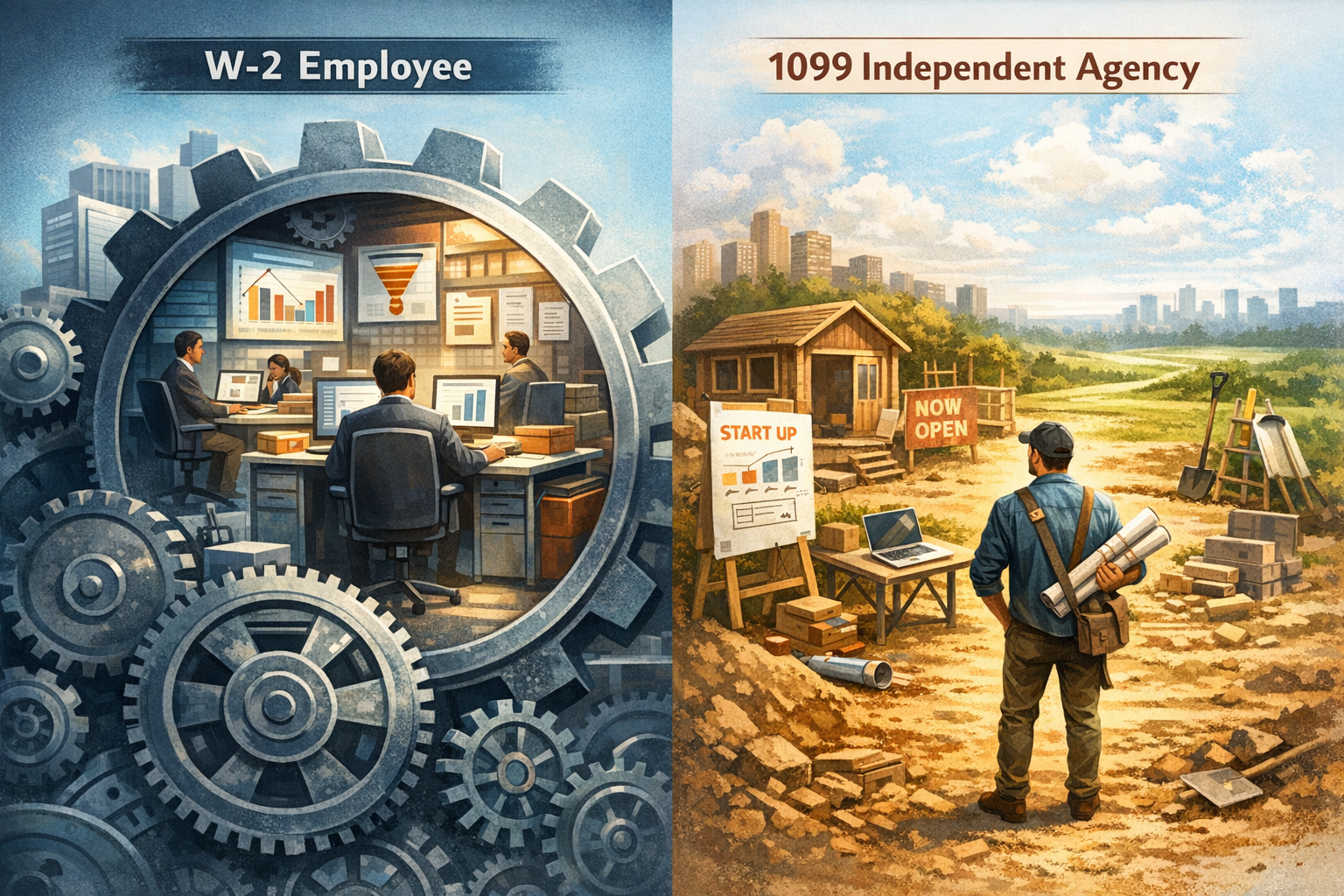
Independent Agency or Employee: What Changes in the US?
Moving from a US employee role, commonly called W-2 employment, to independent work commonly described as a 1099 role changes more than how you're paid. It changes which parts of the business you own, which responsibilities land on you, and what you're building over time.
You might be considering independence because you want more control, because an opportunity has appeared, or because you're tired of helping build someone else's business. The decision becomes clearer when you examine the operating environment each path creates, alongside the possible income.
Two very different operating environments
In an employee role, you join a business that already has some combination of a brand, sales pipeline, marketing, tools, and ways of working. You're paid for your contribution within that system, and most of its infrastructure stays with the company when you leave.
Running an independent agency means building and maintaining more of that system yourself. Alongside delivering a service, you decide on pricing, positioning, the service mix, client relationships, and how to find the next lead. The additional freedom comes with responsibility for whether those pieces work together.
What it costs to get started
As a W-2 employee, your upfront investment is mostly your time and expertise. The company will likely provide the tools, the systems, the marketing support, and sometimes even the training. The infrastructure is already there.
An independent agency needs to account for registration, insurance, a website, contracts, and accounting, as well as the work of maintaining them. The individual items may seem modest, but their combined cost and demands on your attention belong in the decision.
Where your leads come from
In a lot of W-2 environments, leads are at least partially distributed. There's probably some sort of a sales process, an existing brand, campaigns already running. When you join, you focus on converting and delivering. Your pipeline has some support built into it.
An independent agency has to develop its own visibility, referrals, and leads. A marketing slowdown can affect the pipeline and then income, making the connection between effort and revenue feel either rewarding or relentless depending on the circumstances.
How income actually works
Employee income is often more predictable, with a base, structured commissions where applicable, benefits, and automatic tax withholding. Advancement or performance can influence growth, but the role provides a more established structure for what to expect.
Independent income depends on client volume and performance, with benefits and tax planning becoming responsibilities of the business owner. The possible upside comes with variability, particularly while the client base is developing.
Where the risk lives
An employer carries much of the business's operational risk, while leadership sets strategy and the organization maintains its infrastructure. Employees still face uncertainty, but they aren't individually responsible for keeping the whole business running.
An independent owner has to manage revenue fluctuations, marketing slowdowns, and problems in the delivery process. More control brings more direct responsibility for those risks and for deciding how to respond.
What your time actually looks like
Administration is part of independent work, alongside delivery. Contracts, invoicing, disputes, scope, vendors, expenses, and compliance divide your attention among sales, marketing, operations, and financial management. Enjoying the service itself doesn't necessarily mean enjoying the work required to sustain the business around it.
What you're actually building
In an employee role, client relationships often stay with the company, while experience, reputation, and a track record can support your career beyond that particular job.
An independent agency can build repeat business, referrals, contracts, and a brand around its own client relationships. Those may become valuable business assets, although developing them takes work. The choice depends partly on whether you want to build that organization or develop your career within one.
The part people underestimate
Control also changes how you relate to the work. An employee contributes within a structure where someone else sets much of the direction; an owner has to establish and maintain more of that structure.
Decisions that belonged to another person now become yours, including the ones that don't work out. That shift can matter as much as the financial arrangement because it changes how much uncertainty and responsibility you face each day.
Some people thrive with that kind of freedom, and others thrive with structure and defined expectations. Neither preference is wrong, but it's worth being honest with yourself about which environment actually brings out your best work.
A more useful way to think about the decision
The financial comparison is useful, but it won't answer every part of the decision. A few questions can help clarify what you're willing to take on:
- Do you want to build the systems a business needs or work within existing ones?
- Are you comfortable managing uneven income?
- Do you enjoy marketing and explaining the value of your work?
- How long could you cover expenses before the business provides steady income?
The answers may look different depending on where you are in your career. Early on, a W-2 environment can offer skill development, mentorship, and stability. Later, independence can offer leverage, ownership, and upside. Some people prefer one model their entire career.
Choosing the Responsibilities You Want
Both paths require effort and can support meaningful work, although the responsibilities and opportunities differ.
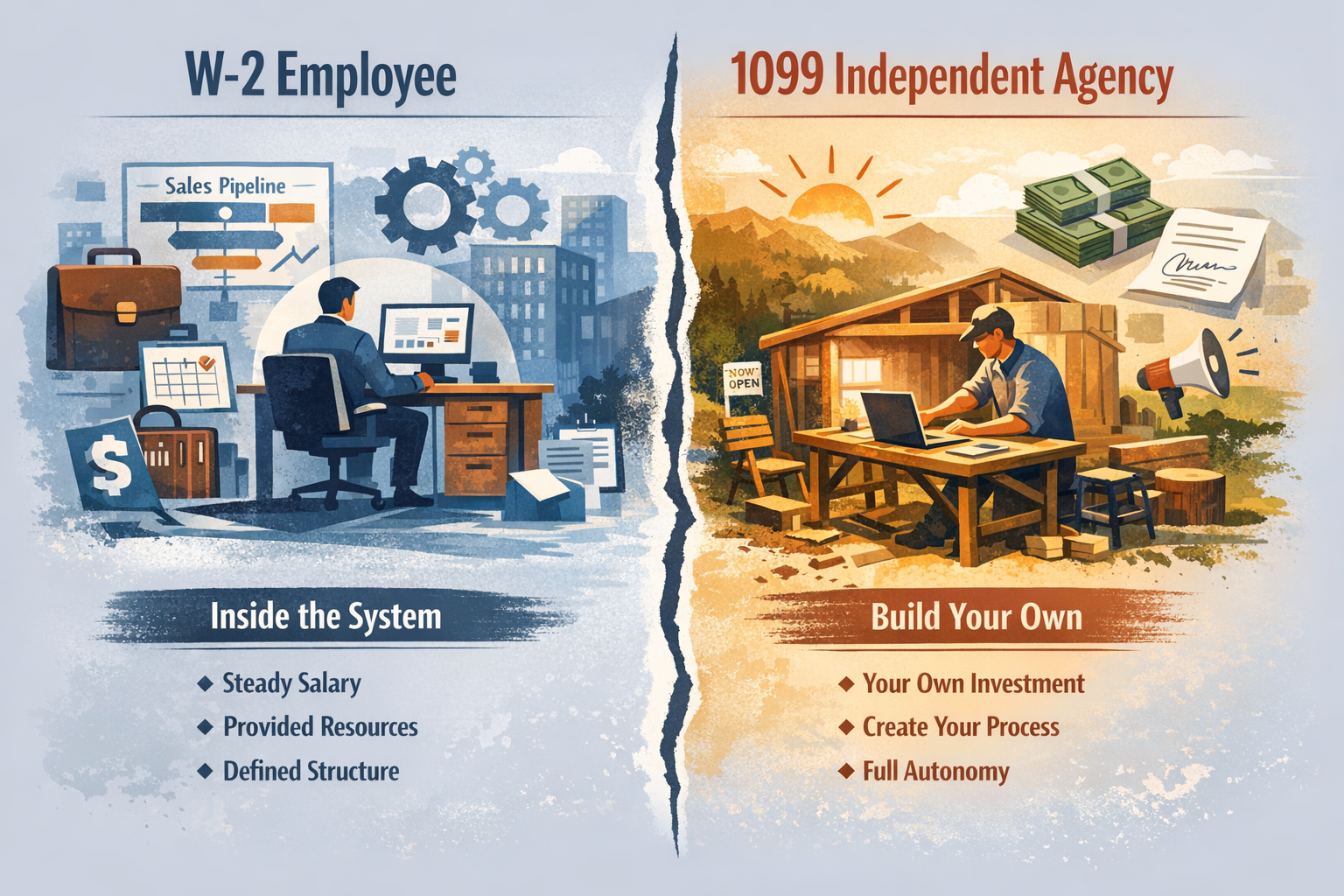
An employee role offers an existing system in which to contribute. An independent agency asks you to build and maintain more of that system, including the work that doesn't directly produce a client deliverable.
Understanding which responsibilities you want, and which risks you can realistically carry, gives you a more useful basis for choosing than assuming either path will be easier.
Related Articles
The Solo Operator - Part 1
Wearing Every Hat: The One-Person Business
Read more →Starting a Business When You Don’t Know Anyone
The entry points most new founders overlook when they think about starting locally.
Read more →Should You Build Your Website Yourself, or Hire Someone Like Me?
Understanding the constraints that should drive this decision
Read more →