
Is Email Marketing Worth It for Small Businesses?
A practical system for staying in touch and encouraging customers to return
After more than a decade working in the email industry, I've had this conversation with small business owners more times than I can count. The hesitation usually sounds something like: "Isn't email just spam? Do people actually read those? I really don't want to annoy my customers."
I understand the hesitation. An inbox full of repeated promotions and impersonal messages can make email seem like something a business should avoid contributing to.
Useful email starts with people who chose to hear from the business and a reason to contact them. A reminder, relevant follow-up, or helpful update serves a different purpose from sending promotions to as many people as possible.
I think it's worth examining that purpose and the result you want before deciding how much effort to invest.
Give each message a useful purpose
Frequent, formulaic messages contribute to inbox fatigue. Using the same channel more thoughtfully means considering whether the message is timely, relevant, and useful to its recipient.
Email gives a small business a way to communicate with subscribers without relying entirely on what a social platform chooses to display. That access still needs care; a contact list isn't permission to send anything at any frequency.
What email actually does for your business
A newsletter is one use of email, but the channel can also support tasks already part of the customer relationship.
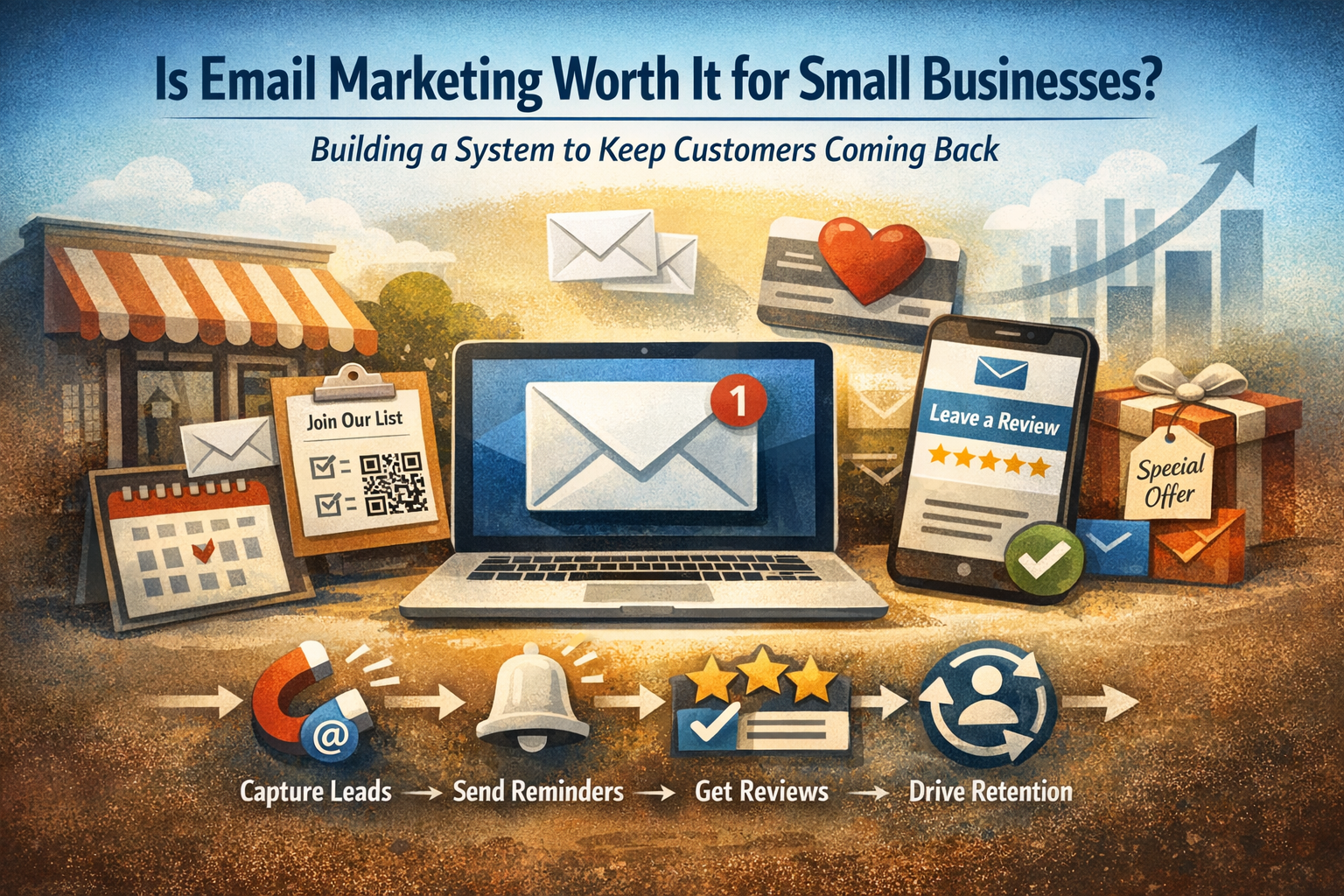
Collecting contact information with permission gives you a way to continue a relationship after a visit, purchase, or booking. A first-time discount, a "join our VIP list" prompt, or a booking form may provide an appropriate invitation. The useful result is a subscriber who understands what they'll receive, rather than a larger list for its own sake.
For a service business, an appointment reminder may be a practical starting point. Salons, dentists, fitness studios, consultants, and auto shops all need customers to know when to arrive or how to change an appointment. A useful reminder can support that process without someone sending each message manually.
A follow-up after service can thank the customer, ask about the experience, and make an honest review easier to leave. It gives the business a repeatable way to learn and invite feedback instead of waiting for customers to think of it themselves.
Seasonal messages can also serve a purpose beyond discounts. Maintenance reminders, back-to-school offers, or holiday gift card information are useful when they fit something the customer might need at that time.
Email can support return business through relevant follow-ups, a six-month reminder, a birthday offer, or a tip connected to a purchase. I wouldn't assume any message creates loyalty by itself, but consistent, useful contact gives the business a way to maintain the relationship and examine whether customers respond.
Why most small businesses aren't using it well
An owner may see the potential but be unsure where to begin, particularly when email looks technically complicated or like another ongoing promotional task.
From my experience in the industry, the more useful starting point is a defined job: support bookings, follow up on a service, share timely information, or invite a return visit. That gives the owner something to test without committing to a high volume of messages.
The channel becomes easier to assess when it's connected to work the business already needs to do, rather than treated as another campaign requirement.
Start with one message and assess the result
Email is more likely to be useful when you collect addresses with permission, choose timely communication, and connect useful messages such as appointment reminders to a clear outcome.
Generic discount blasts, messages to people who didn't opt in, and repeated promotion without a useful purpose can work against that relationship.
Choose one reminder or follow-up, decide what it should help the customer and business do, and examine the result. That gives you a basis for continuing, adjusting, or stopping rather than assuming email is either always worthwhile or always intrusive.
Related Articles
Automate the Outcome, Not Just the Task
A practical way to think about workflow automation, AI agents, total cost of ownership, and how much autonomy a business process actually needs.
Read more →How Email Marketing Actually Works: The Ecosystem Behind Deliverability
A behind-the-scenes look at IP reputation, mailbox providers, and the infrastructure that determines inbox placement
Read more →The Quiet Systems That Drive Loyalty
Great experiences create satisfaction, but simple systems can help influence whether someone actually comes back.
Read more →