
The Second Visit Isn't Automatic
Rethinking How Restaurants Earn Loyalty
Part 1 of 4 in Why Diners Don’t Come Back
- 1. The Second Visit Isn't Automatic
- 2. The Math of Repeat Revenue
- 3. What Actually Increases Repeat Visits
- 4. The Quiet Systems That Drive Loyalty
A good first visit gives someone a reason to consider returning, but it doesn't tell you whether they'll become a regular. Understanding the next decision means examining who returns, how long it takes, and what else influences the choice.
Food and warm service matter, while a guest's failure to return may have several explanations. Investigating those before choosing a change helps avoid trying to solve a problem the business hasn't yet understood.
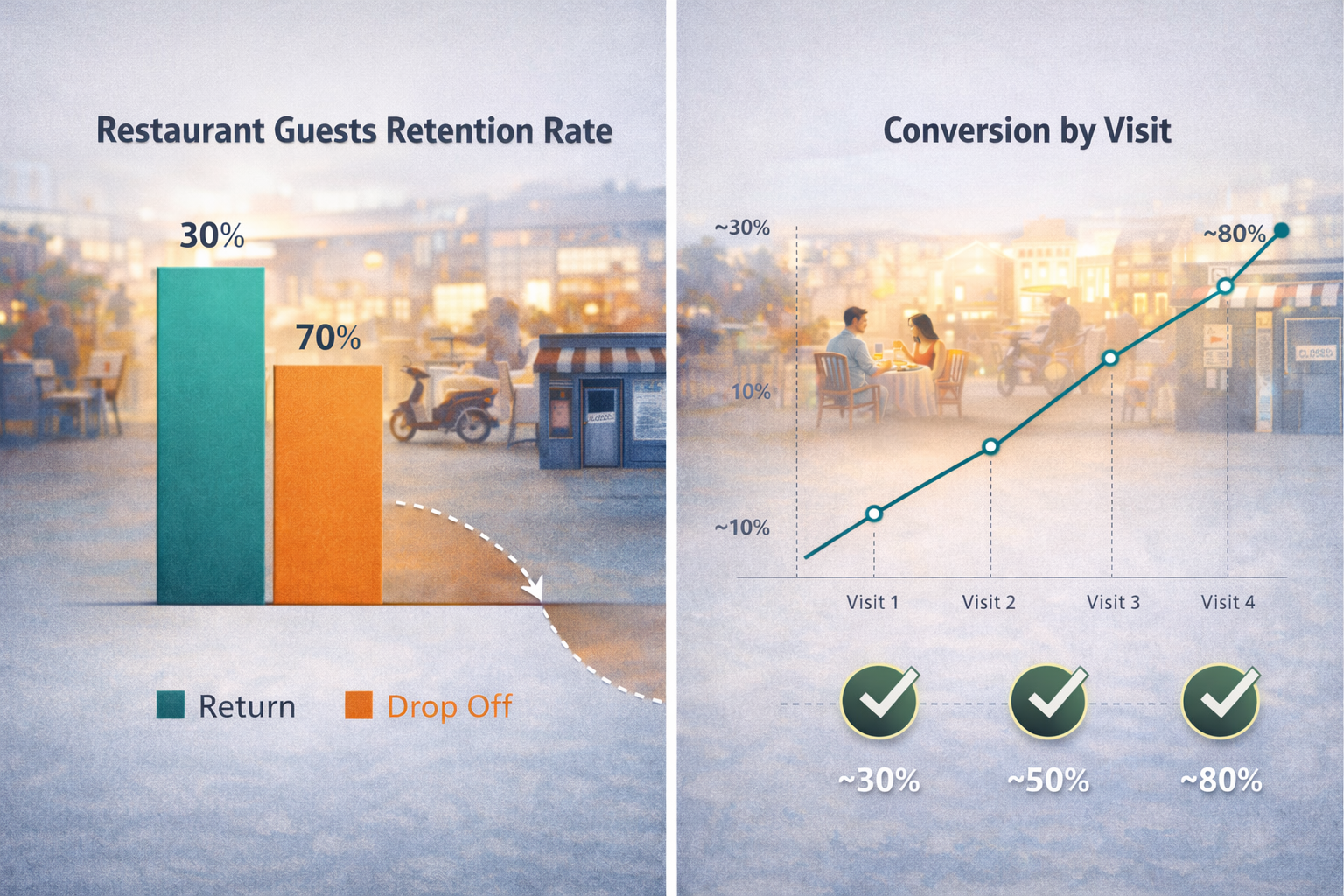
The Hidden Drop-Off
When a first-time diner doesn't return, it doesn't necessarily mean they were unhappy. Convenience, price, competing options, or a change in circumstances may all play a part. You need more information before deciding which explanation fits.
A restaurant competes with nearby venues, dozens of other options, delivery apps, new openings, and familiar habits. A guest can enjoy the visit and still choose the most convenient option next time.
That makes the gap between visits worth examining. A person might remember the restaurant without having a timely reason or easy opportunity to choose it again.
Learning From the Guests Who Return
A return gives you another chance to understand what the guest values and what could make a third or fourth visit appealing.
Food, service, price, and convenience may have different weight for different people. A particular visit number doesn't establish that a habit has formed, and the relationship between visits can be part of what influences the next choice.
What's Worth Watching
The following areas give you possible starting points to investigate rather than a required retention checklist.
The Second Visit Window
If guests typically return after two weeks, a month, or two months, that timing may inform a reminder or offer for people who've agreed to receive it. Check the actual response rather than assume every restaurant has the same useful window.
In many cases, this window isn’t clearly defined, which makes it difficult to act on. Even incomplete records or customer conversations can give you a starting point, as long as you recognize what they leave out.
Identifiable Guests
Consider how much of the returning pattern you can observe and which guests have agreed to be contacted. Without that connection, the business has fewer ways to follow up or assess the response.
The purpose is a respectful relationship, not surveillance. Contact information gives you an opportunity to communicate, but it doesn't establish that communication will prompt a return.
The experience a guest remembers
A smooth operation can prevent frustration, while a guest may also remember something specific that makes the restaurant worth choosing again. "That was good" and "we need to go back there" describe different responses.
Look for the moments guests mention or share with others. Those observations can help you decide what to preserve or improve without manufacturing an experience solely for a retention target.
Friction to Return
Someone may have enjoyed the visit but find reservations, parking, wait times, or ordering difficult. Understanding those obstacles gives you a more specific problem to address than assuming they need another promotion.
Convenience may be one reason someone chooses another restaurant even after enjoying yours. Look for specific obstacles before deciding whether to spend time on booking, service, the menu, or something else.
Keep learning from the next visit
Each visit gives you another chance to understand what brings someone back. Treat that as an ongoing learning process rather than a fixed progression from discovery to habit.
Good food and service, useful follow-up, and lower friction can support the decision together. None needs to be pushy or manipulative; each should make the relationship more useful to the guest.
Start with an obstacle you can observe, such as booking difficulty or unclear opening hours, then make a manageable change and assess whether it helps. That gives you a way to improve without beginning with a large new system.
Related Articles
The Math of Repeat Revenue
How small improvements in retention can help quietly reshape long-term revenue
Read more →What Actually Increases Repeat Visits
A practical look at the small systems that often influence repeat visits
Read more →The Quiet Systems That Drive Loyalty
Great experiences create satisfaction, but simple systems can help influence whether someone actually comes back.
Read more →