
How to Choose and Budget for More Than One Marketing Channel
Weigh each channel's role, cost, and demands on your time before expanding
Social media or word of mouth may provide a useful starting source of customers, but dependence on one channel makes changes in its reach or audience harder to absorb.
A platform can change visibility rules, while referral volume can vary for other reasons. Adding another channel may reduce that dependence if it reaches relevant people and the business can maintain it.
You don't need to be everywhere. You need a clear reason for adding a channel and a budget that includes the effort of running it.
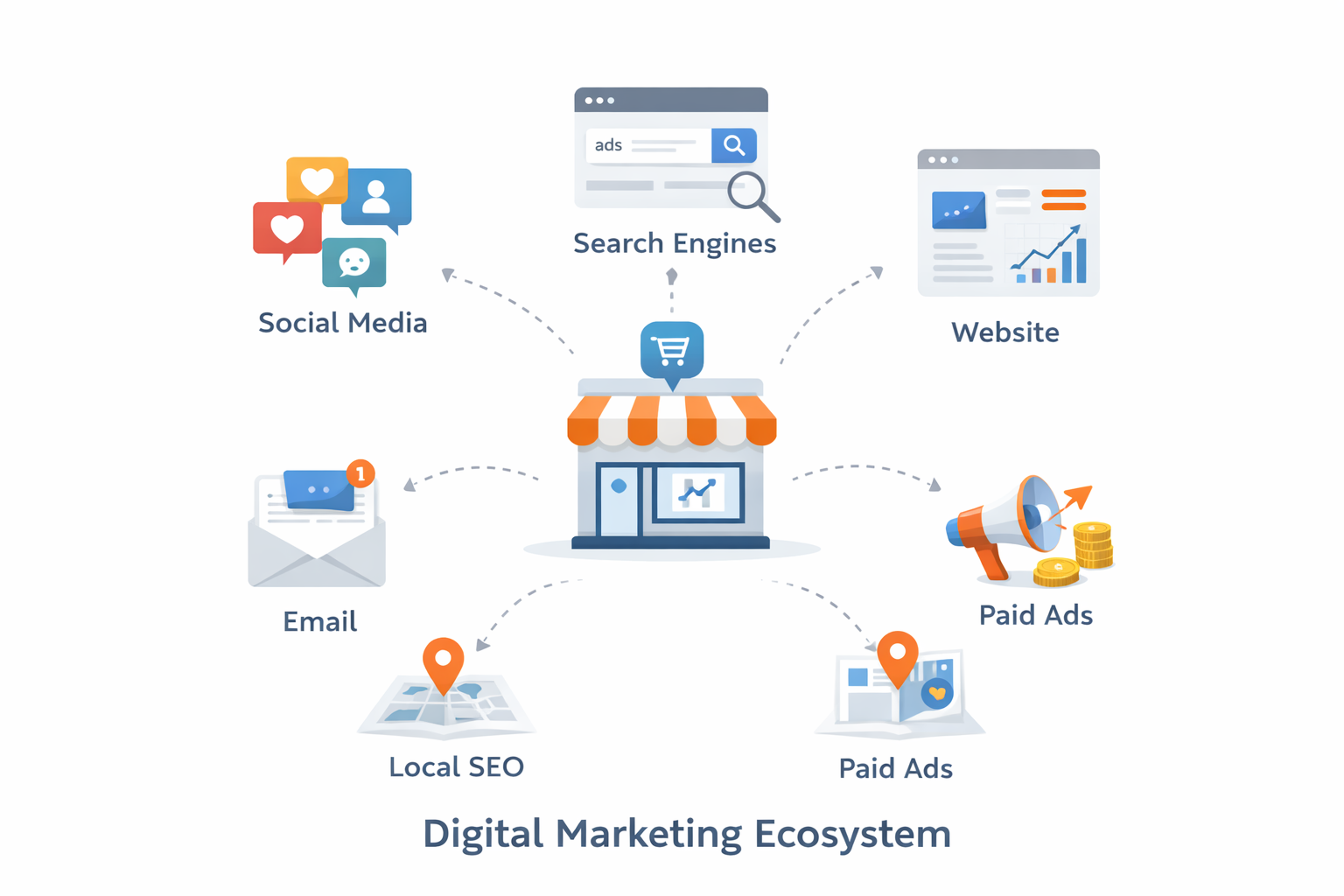 Customers rarely convert from a single touchpoint. Growth happens when channels work together.
What Different Channels Contribute
Different channels can support different parts of how a customer discovers, assesses, and chooses a business. Their roles also overlap, so it's useful to examine what each contributes in your own process.
Social media may introduce the business, search may reach someone already looking, and email can support continued contact after a visit. Paid ads can target an audience, while local search engine optimization (SEO) supports nearby discovery. The value of each depends on the people and purpose involved.
Someone might discover a brand on Instagram, look for reviews on Google, visit the site, and subscribe to an email offer before buying. That sequence gives the channels complementary roles, but your customers may take a different route. Understanding their behavior helps you decide where another channel would actually help.
Understand What You're Actually Paying For
Expanding your marketing doesn't mean spending blindly, but it does mean being honest about what things actually cost. Some costs are obvious: paid ad spend, software subscriptions, outsourced content. Others sneak up on you. An unpaid social post still takes time to plan, create, and maintain. Paid promotion is an option to test, not a requirement for every business. Its cost depends on the audience, competition, campaign setup, and results, so assess the cost per useful outcome rather than assuming narrower targeting is always more expensive.
Compare that full cost with the outcome it produces, rather than judge spending only by the platform's fee.
Allocate Based on Function, Not What's Trending
One of the more common patterns in small business marketing is chasing what's getting attention instead of what's practical. A platform can be dominating headlines and still be the wrong fit for your audience.
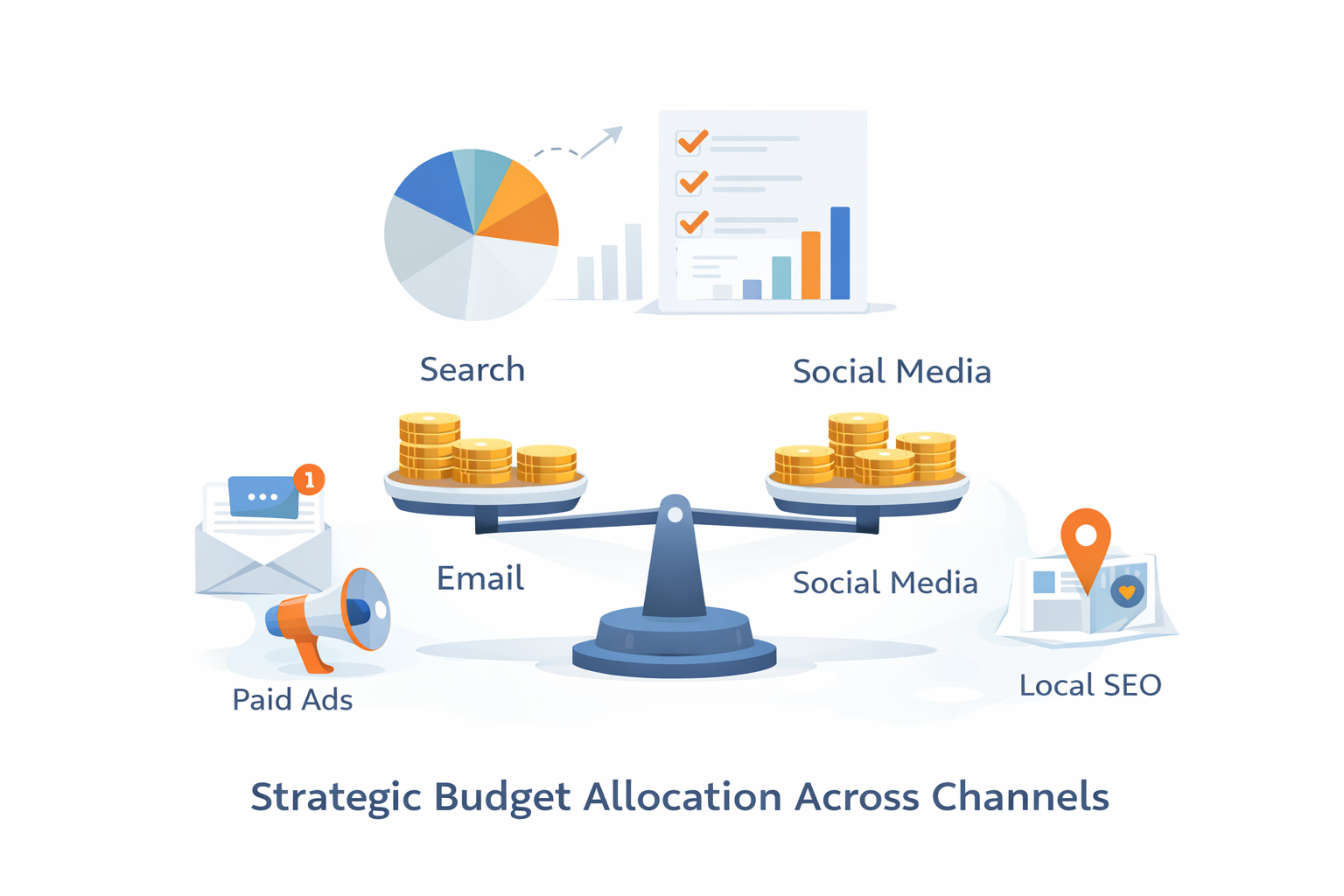 Smart growth comes from allocating budget based on function and performance, not trends.
Before investing, consider where relevant customers spend time, whether the goal is discovery or a purchase, and what a useful result costs. The value of a customer over time also affects how much acquisition effort the business can justify.
Start with a bounded test, track inquiries and revenue as well as activity, and examine the result before increasing the commitment.
Platform Incentives Are Worth Paying Attention To
Ad credits, seasonal offers, small-business tiers, and bundled discounts can reduce initial costs. They create room to test a platform, but they don't establish that its audience or ongoing cost fits the business.
Check eligibility, required spending, expiry dates, and the cost after a promotion ends. An incentive is useful only if the channel is worth testing for your business.
Add a channel for a defined reason
A channel is useful when it supports a gap in discovery, assessment, continued contact, or purchase. More visibility alone doesn't tell you whether another platform is worth the work.
Decide what each channel should contribute, account for its cost and maintenance, and track the customers and revenue associated with the effort. Traffic and impressions can help explain the process, but they shouldn't replace the outcome you're trying to improve.
That gives the business a way to develop a wider presence without treating complexity as a sign of a stronger strategy.
Related Articles
Marketing Attribution, Fading Influence, and the Delay Before a Sale
How to assess earlier marketing work when the sale comes later
Read more →What Actually Goes Into SEO (Beyond Keywords)
The technical pieces that help search engines understand, crawl, and index a website.
Read more →Local SEO Explained: How Small Businesses Get Found Online
Understand the fundamentals behind rankings, reviews, and why your competitors show up before you.
Read more →