
Craft Builds Reputation. Systems Build Reach.
Why the way your business shows up online shapes whether customers choose you
The work around the craft
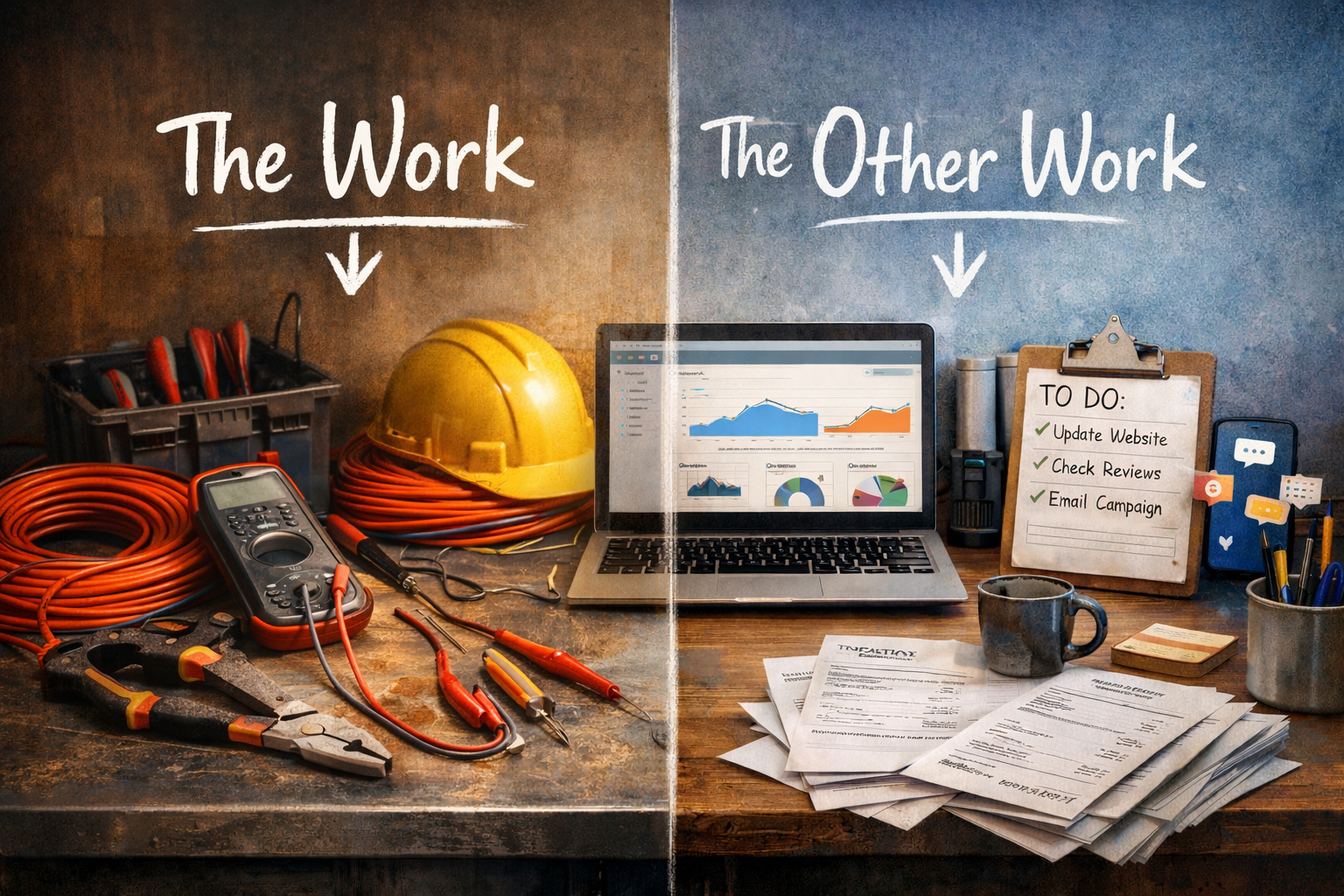
A small business owner's task list can fill with work that looks little like the reason they started: updating the website, responding to reviews, investigating a Google listing, or setting up booking and email systems.
A chef wants to make good food, an electrician wants to do the job safely and correctly, and a landscaper wants to deliver a good result. Managing platforms can feel disconnected from that purpose, particularly when it takes time away from customers and the work itself.
Help customers find and assess the work
Recommendations and personal conversations still bring business, but a prospective customer may investigate a referral online before acting on it.
Reading reviews, checking the website, and comparing two or three alternatives helps that person assess a business before speaking with its owner. The online information becomes part of how the reputation reaches someone who hasn't experienced the work yet.
Connect the tools to a customer problem
The workload can feel overwhelming when each recommendation appears separate: more visibility, search engine optimization (SEO), content, or automation. Without a connection to how customers choose, responding to a review or improving a booking form looks like another obligation added to a full week.
Other owners face the same assortment of advice. Identifying a particular gap in the customer process gives you a better basis for choosing which work deserves attention.
What might actually be going on
A useful change may reduce the friction between the business and people already looking for its services, rather than require more activity everywhere.
A clear website can help someone feel comfortable calling an electrician. A booking option might capture an inquiry from a person who won't leave voicemail at 9pm, while visible reviews provide evidence for someone unfamiliar with the business.
Those improvements don't replace craft; they help a customer reach and assess it. Their purpose is easier to judge when connected to a specific point where the process breaks down.
Choose an improvement you can assess
Consider whether the proposed change helps the right customers find you, decide whether you're a fit, or contact you. That gives a practical basis for assessing it beyond the claim that every business needs another platform.
Useful effects might include fewer missed inquiries, easier scheduling, more consistent contact, or less dependence on one referral source. Check for those changes rather than assume the tool itself creates growth.
Leave enough time for the work itself
It's understandable to resist tasks that don't improve your craft directly. Customers still need a way to discover and choose that craft, so the practical challenge is providing enough support without letting the surrounding systems consume the attention needed to do it well.
Build enough support for the business
You don't need to become a full-time marketer or continually change the setup. Start with enough structure for customers to find the work, assess it, and reach you when you can't answer the phone.
A manageable system that serves those needs gives your skill a clearer path to the customer. Perfection isn't the requirement.
Related Articles
Marketing Attribution, Fading Influence, and the Delay Before a Sale
How to assess earlier marketing work when the sale comes later
Read more →Where Is Value Actually Created in a Business?
Customers experience the entire chain of interactions — not just the product.
Read more →When "How Do I Get Paid?" Stops Being a Side Question
Choosing payment infrastructure is really about deciding how much complexity you want to own
Read more →