
Where Is Value Actually Created in a Business?
Customers experience the entire chain of interactions — not just the product.
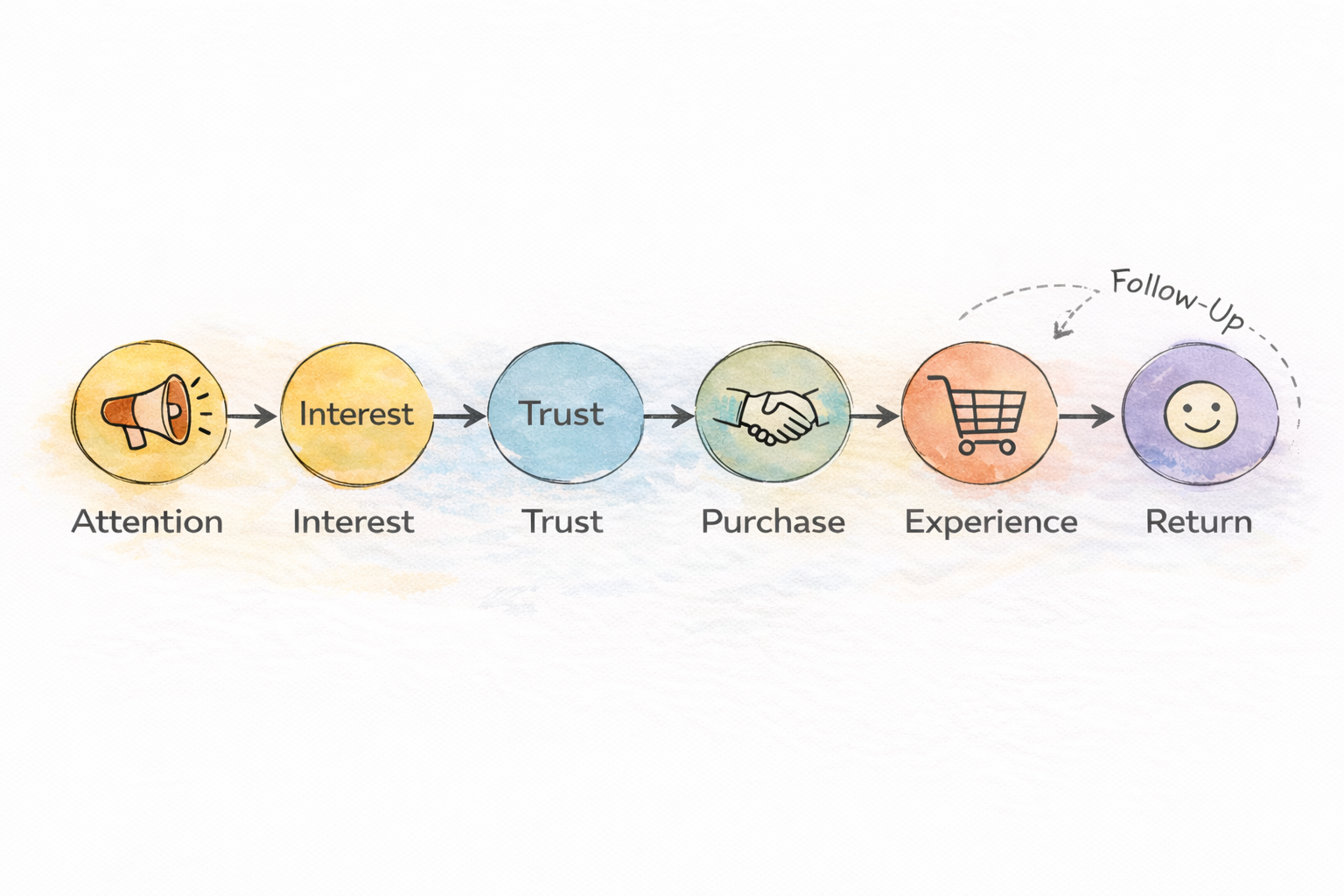
I've come back to the same question across different kinds of businesses: what makes the experience worthwhile for the customer?
In software, analytics and product usage give us ways to examine that question. A restaurant, bakery, or retailer faces it too, although the interactions look different. The customer encounters more than the product itself before deciding whether to buy or return.
Looking at discovery, the buying decision, service, and the possibility of returning connects the work of different parts of the business to one experience. Each interaction can support what the business does well or make it harder for the customer to reach it.
Thinking About Value as a System
Marketing, sales, operations, and support are useful ways to organize work internally, but the customer moves through their combined results. A solution can be valuable while the surrounding process makes it difficult to assess or use.
I find it useful to examine that sequence rather than assign customer value to one department:
Attention → Interest → Trust → Purchase → Experience → Return
A difficulty at one stage can weaken the benefit of work done elsewhere. When growth disappoints, the issue may be how people reach and experience the offering rather than whether the business creates value at all.
A Simple Example: A Local Bakery
A bakery's recipe, ingredients, and skill are central to its product, but a customer begins forming expectations before the first bite. Consider the steps around a cupcake purchase.
Discovery. Someone searches "cupcakes near me." Two bakeries come up. One has great photos, 4.8 stars, hundreds of reviews, clear hours, and a link to the website. The other has no photos, a handful of reviews, and outdated hours. Before the customer has ever walked through a door, one business already feels more trustworthy.
Evaluation. The customer clicks through to the website. If it's clear and easy to navigate, confidence builds. They can quickly find the menu, pricing, location, and hours. If the site is confusing or outdated, the perceived value of the business drops, even though the cupcakes haven't changed at all.
The in-store experience. When the customer walks in, they see the display case, smell fresh pastries, get greeted by staff. All of it adds up cumulatively. Even if two bakeries used the exact same recipe, the one with the better atmosphere would often feel like the better product.
The product itself. The first bite meets expectations formed through the information, atmosphere, and service that came before it. The cupcake matters, but the customer isn't assessing it independently of those experiences.
After the purchase. The experience doesn't end when the customer leaves. A loyalty program, seasonal specials, a birthday reward: these extend the relationship beyond the original transaction and create reasons for them to come back.
Find the Point Where Customers Get Stuck
The bakery example gives you a way to examine your own business. Choose one customer action, such as placing an order, and walk through the information and steps it requires. Where would someone have to guess, wait, or ask for help?
Look for evidence before choosing what to fix. Repeated questions may reveal missing information. Abandoned orders may point to a problem worth investigating, though the numbers alone won't explain why people left. A conversation with a customer can help you understand what happened.
Where Value Quietly Leaks
It's possible to spend heavily on creating or promoting an offering while paying less attention to the steps that prevent customers from experiencing it.
Missing photos, unclear online information, a confusing website, a difficult checkout, slow service, or no relevant follow-up can each create friction at a different stage.
Examining those gaps gives the business another option alongside doing more marketing: improve the path customers are already trying to take.
Three Ways Activities Support Value
An activity may create value through the product or service, communicate value through marketing and reputation, or protect value through support, delivery, and reliability. Those roles depend on one another in the customer's experience.
Improving one activity without examining its connections can leave another part of the experience unresolved.
Why Great Businesses Sometimes Struggle to Grow
One of the more frustrating situations for a business owner is knowing they have a genuinely great product but finding that growth still feels inconsistent. Customers who try it love it, but getting people in the door feels unpredictable.
When that happens, the issue may be earlier in the customer journey. The business may be creating value but making it difficult for customers to discover or experience it.
A restaurant with great food but a low performing online presence means fewer people discover it in the first place. A retailer carrying high-quality products but a difficult website means customers leave before completing a purchase. A service business delivering strong results may miss opportunities for repeat work if past customers don't know when or how to use its services again.
In those situations, improving discovery or the surrounding process may help customers reach what the business already does well.
The change doesn't have to be dramatic. Evidence of a specific gap gives you a place to make a focused improvement and check its effect, rather than assume one large investment will strengthen the whole experience.
Choose One Point to Improve
Choose a point where customers struggle to find information or act, make a manageable change, and check whether it helps. The product still matters; this work helps people reach and experience it.
Related Articles
Marketing Attribution, Fading Influence, and the Delay Before a Sale
How to assess earlier marketing work when the sale comes later
Read more →When "How Do I Get Paid?" Stops Being a Side Question
Choosing payment infrastructure is really about deciding how much complexity you want to own
Read more →How Do I Get Leads Without Spending All Day on the Phone?
Build a Lead System That Works While You’re On the Job Site
Read more →