
How Do I Get Leads Without Spending All Day on the Phone?
Build a Lead System That Works While You’re On the Job Site
When Customer Inquiries Arrive While You're Working
A service business can earn inquiries while its owner is on a job, driving, managing crews, estimating, or ordering materials. If responding depends entirely on answering the phone live, good opportunities can arrive when nobody has time to handle them.
That gives you a practical problem to solve before doing more lead generation: capture the inquiries already arriving and give people a useful next step while you're working. A focused booking or follow-up process can help without requiring a complicated system.
What a Missed Call Actually Costs
A missed call can be a missed opportunity when a customer contacts two or three businesses and proceeds with one that responds first. That won't describe every buyer, but relying entirely on live calls makes availability part of what determines which jobs the business can consider.
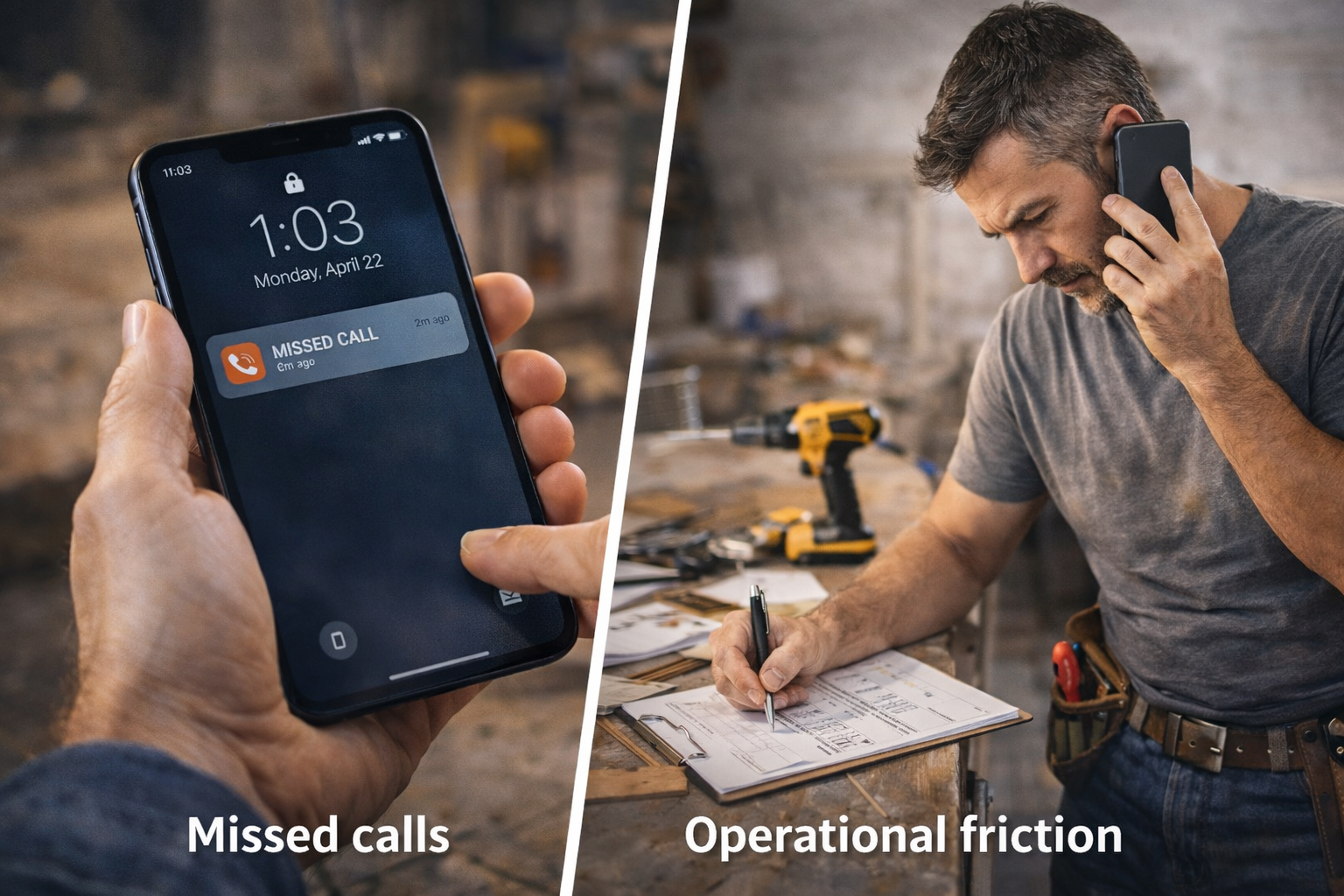
Your experience and quality of work may never enter the decision if the customer can't reach you or doesn't know when to expect a response. A clear next step gives them something to work with before a conversation is possible.
A Different Way to Think About How Your Business Operates
Consider which parts of intake could continue without a live conversation: capturing the inquiry, answering routine questions, collecting information about the job, or offering an appropriate appointment.
You still build the relationship and deliver the service, but you don't have to be involved in every administrative exchange. The purpose is to make the process fit how the business actually operates.
A Couple of Things That Tend to Help
An automatic missed-call text is one option. A simple message could say:
Sorry we missed you, here's a link to book an estimate.
That gives the prospect a way to act while you finish the job, rather than leaving them to guess whether or when you'll call back.
A website booking form is another option for work that can be scheduled with a few clear questions. Someone can select a service, provide details, and choose an available time without repeated callbacks. It works best when the form collects enough information for the appointment to be useful.
Neither option needs to replace the personal side of the business. They support it by capturing an inquiry and reducing the work required to reach a meaningful conversation.
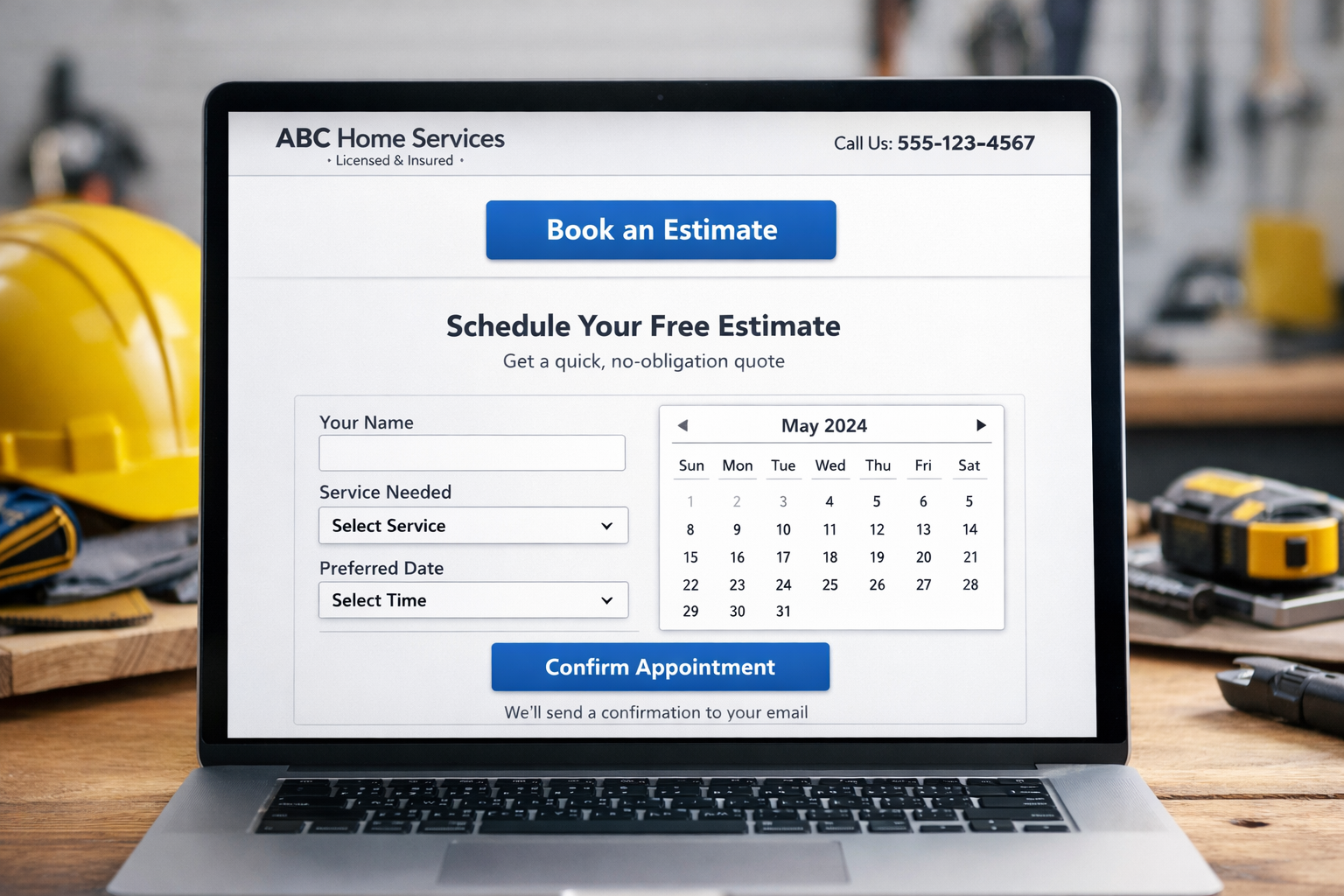
Online booking works well when you offer defined services with predictable scopes, when you can qualify jobs with a handful of simple upfront questions, and when you operate within clear service areas and time blocks. It works poorly when every project requires deep consultation before anything can be scheduled, or when your offerings aren't standardized enough to fit into a form.
Design that process before installing software. The booking tool needs to reflect service scope, qualification, availability, and what happens when an inquiry doesn't fit.
Match the tool to the booking process
These platforms offer different kinds of support, so compare the parts your process needs rather than assume they're interchangeable:
Calendly can support estimates and consultations through scheduling embedded in a website. It may fit a solo operator or small team whose main requirement is selecting an available appointment.
Jobber covers a broader field-service workflow, including scheduling, invoicing, customer relationship management (CRM), and a customer booking portal. That scope may be useful for a service company coordinating multiple crews.
Housecall Pro combines reminders, notifications, and payments with contractor operations. Assess those capabilities against the work you want to coordinate and maintain.
A Booking Process That Doesn't Require a Live Conversation
A phone-dependent process can move through voicemail, callback attempts, and phone tag before anyone schedules an appointment. Each exchange uses attention and gives the customer another opportunity to look elsewhere.
With an asynchronous process, a customer can click "Book an Estimate", answer relevant questions, choose a time, and receive a confirmation and reminder. You can review the captured information before the appointment rather than collect all of it through live exchanges.
Across five or ten bookings a week, that can mean less phone tag and fewer scheduling exchanges to handle yourself.
Make inquiries manageable while you're working
You can't always be personally available, but the business can still provide a way to leave an inquiry or take the next step. The right process depends on what can be scheduled directly and what still needs your judgment.
Start with the missed calls and repeated scheduling exchanges you already handle, then consider which changes would reduce that dependence on your immediate attention.
A website doesn't need to automate every inquiry. It needs to support a process that gives customers a useful response and lets you do the work they hired you for.
Related Articles
Marketing Attribution, Fading Influence, and the Delay Before a Sale
How to assess earlier marketing work when the sale comes later
Read more →Where Is Value Actually Created in a Business?
Customers experience the entire chain of interactions — not just the product.
Read more →When "How Do I Get Paid?" Stops Being a Side Question
Choosing payment infrastructure is really about deciding how much complexity you want to own
Read more →